
What Flock Cameras Actually See, it’s f*cked up
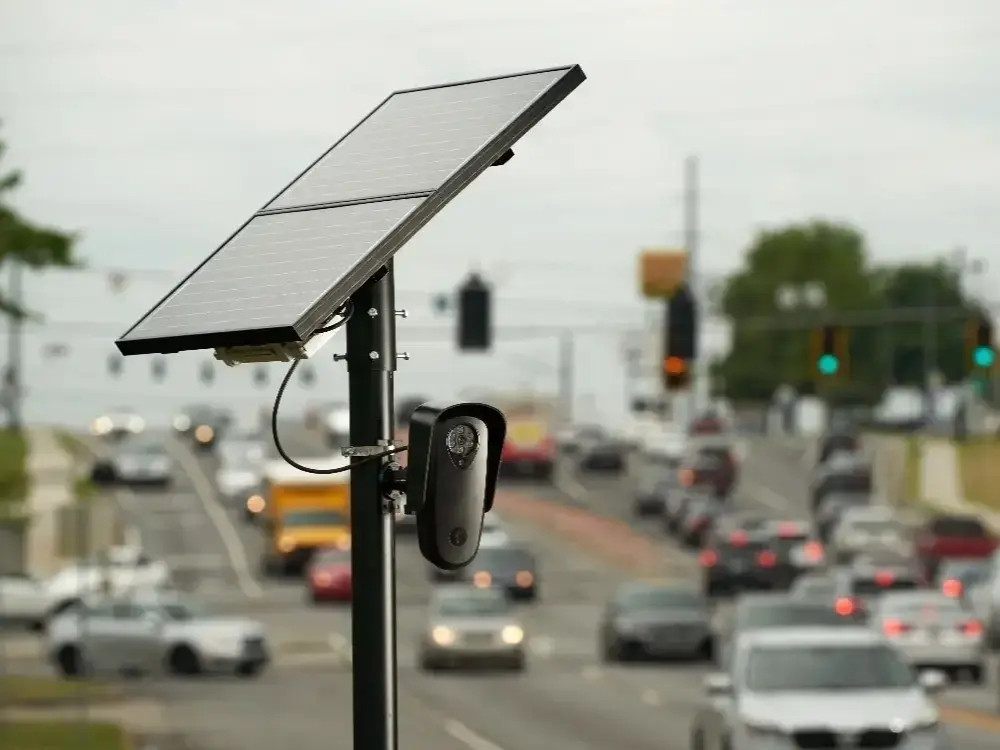
Somewhere on your daily route, right now, a camera is taking pictures of your car. It is not photographing a suspect or responding to a crime. It is simply logging you, your plate, your make and model, your bumper stickers, the time, the date, the exact spot on the map where you were. It does this to every single car that passes.
That is Flock Safety, and it now operates in over six thousand communities across the country, quietly building one of the largest location tracking networks in American history, one license plate at a time.
The company insists this is not surveillance of you personally (sure). Flock states that its system reads vehicle characteristics rather than faces, and cannot identify or track a specific individual. That distinction sounds reassuring until you think about what a license plate actually is: a government issued identifier permanently and uniquely linked to you. Pretending that tracking a plate is somehow not tracking a person is a technicality, not a true. Of course it’s tracking a person and most importantly it’s tracking YOU.
While many have taken up the argument that if you are not doing anything wrong, you have nothing to worry about, others have realized that such an argument is only good if the powers that be, the administration in power at the time doesn’t see you or people like you as a threat.
For example, Flock’s nationwide camera network has become a flashpoint in the immigration enforcement debate, largely because of how easily plate data can move between agencies that were never part of the original local decision to install these cameras. An ACLU investigation found that more than eighty local police departments configured their systems to automatically share license plate data with Immigration and Customs Enforcement, often without public disclosure and in some cases in direct conflict with their own city’s sanctuary policies. That access has allowed federal agents to search a driver’s recent movements across thousands of communities using a network that residents largely believed was limited to local crime response. The backlash has been sharp enough that some cities have begun reversing course entirely, and reports from early this year describe activists in cities from San Diego to Virginia physically dismantling Flock cameras in protest, citing the network’s role in supporting deportation operations as a central grievance. What this means is that Flock is only a good idea when the government isn’t using it against you. However, in a country where exchange of power happens every 4 years it is easy to see how Flock could be used by the government in ways that would not benefit most.
What does this all mean? It means that being law abiding does not protect you from a database or invasion of privacy or from having your every movement recorded in a log/database and expertly recorded somewhere that 3rd parties have access to. It does not stop your daily movements from being logged, stored, and potentially shared with agencies that were never part of the original conversation when your city approved these cameras. The Electronic Frontier Foundation has warned that this kind of aggregated location data can reveal which health clinic you visit, which immigration office you have been to, which protest you attended, or which place of worship you walked into, none of which is illegal, all of which is now sitting in a database. Privacy is not something you forfeit the moment you become innocent. It is something you are entitled to precisely because you are innocent, and a system that treats every driver as a suspect worth logging gets that backwards.
And this is not a hypothetical worst case. A joint investigation found that at least fifty officers nationwide have been accused, charged, or convicted of abusing license plate reader systems, in many cases to stalk a former partner. The tool built to catch criminals has repeatedly been turned into a tool for criminals wearing a badge. Facing that backlash, Flock announced it would shrink its default data retention from thirty days to seven and add new abuse controls, but the ACLU has pointed out that officers have gotten around similar safeguards before. A policy change is not the same as a fix.
So what can you actually do?
Altering, covering, or obscuring your own plate to physically defeat these cameras is illegal in most states, regardless of your reasoning, so that is not a real answer, HOWEVER there are many readily available tiktok videos, youtube shorts, and other wealth of information on what others have done to deal with this nuisance (for the record we are not advising you to look up or copy any of the actions you might see on other platforms and we are not lawyers lol).
First, you can plan your routes AROUND and away from flock and view how many flock cameras are in your area and where they are located by visiting this site:
www.DeFlock.Org
This is the official site used by anti-flockers and will show you where every camera is.
With that said, The real answer is pressure, applied at the local level, where these decisions are actually made. Think your local City Council. Find out if your city already has a Flock contract, and whether it was ever put to a public vote, because many were not. Learn your state’s specific rules on this technology, since states like California already require public meetings and strict usage policies before these systems can even go live. Ask your local police department directly whether your city’s data is being shared outside your community, because investigations have already found that more than eighty local departments quietly configured their systems to share plate data with federal immigration authorities, sometimes in direct conflict with their own city’s stated policy.
None of this requires special skills. It requires showing up, asking questions, and refusing to accept “you have nothing to hide” as a reason to stop asking them.
So what do you think? Is this trade-off between safety and privacy worth it? Share your thoughts in the comments below.